Getting more out of infrastructure that cannot grow fast enough
Transformers builds AI-powered decision support for the people who run operations. We were founded by a team that spent years on these problems in aviation, and we build for operations of every kind: anywhere scarce resources have to be planned, allocated and rescheduled against constraints that move by the hour.
Why we build this
Resource management is one of the more relevant problems of this decade. Across the operations we work with, the same structural pattern keeps surfacing: capacity is essentially fixed, while demand keeps growing.
We learned that in aviation. Our founders spent years building decision support for airports and airlines, where the same runways and stands are expected to handle roughly twice as many passengers by 2040. What became clear along the way is that almost none of the hard part is aviation-specific. In defence, budgets are climbing again while force structures are not expanding at anywhere near the pace at which operational tempo is increasing. In ports, in logistics, in any asset-heavy operation, building more is slow, expensive, contested, or simply not feasible on the relevant timescale.
So we built a next-generation, AI-powered decision support platform for operations in general: planning, observing and optimizing the allocation of scarce resources, so that the people running an operation get materially more out of the infrastructure that already exists. Aviation is where we come from and one of the places the platform runs today, not the edge of what it is for.
Built for operations, not for one industry
The same optimization core applies wherever fixed capacity has to absorb rising demand. We sharpened it in aviation, where the constraints are hardest and the feedback is immediate, and we build it for every operation that runs on the same kind of decisions.
Operations at large
What we build forPlanning, allocating and rescheduling scarce resources — people, equipment, physical space and time slots — against constraints that change hour by hour. The data model, the solvers and the interfaces are domain-agnostic: what differs per operation is the objects being scheduled and the rules they have to respect.
That is the product. The industries below are where we have taken it so far.
Aviation
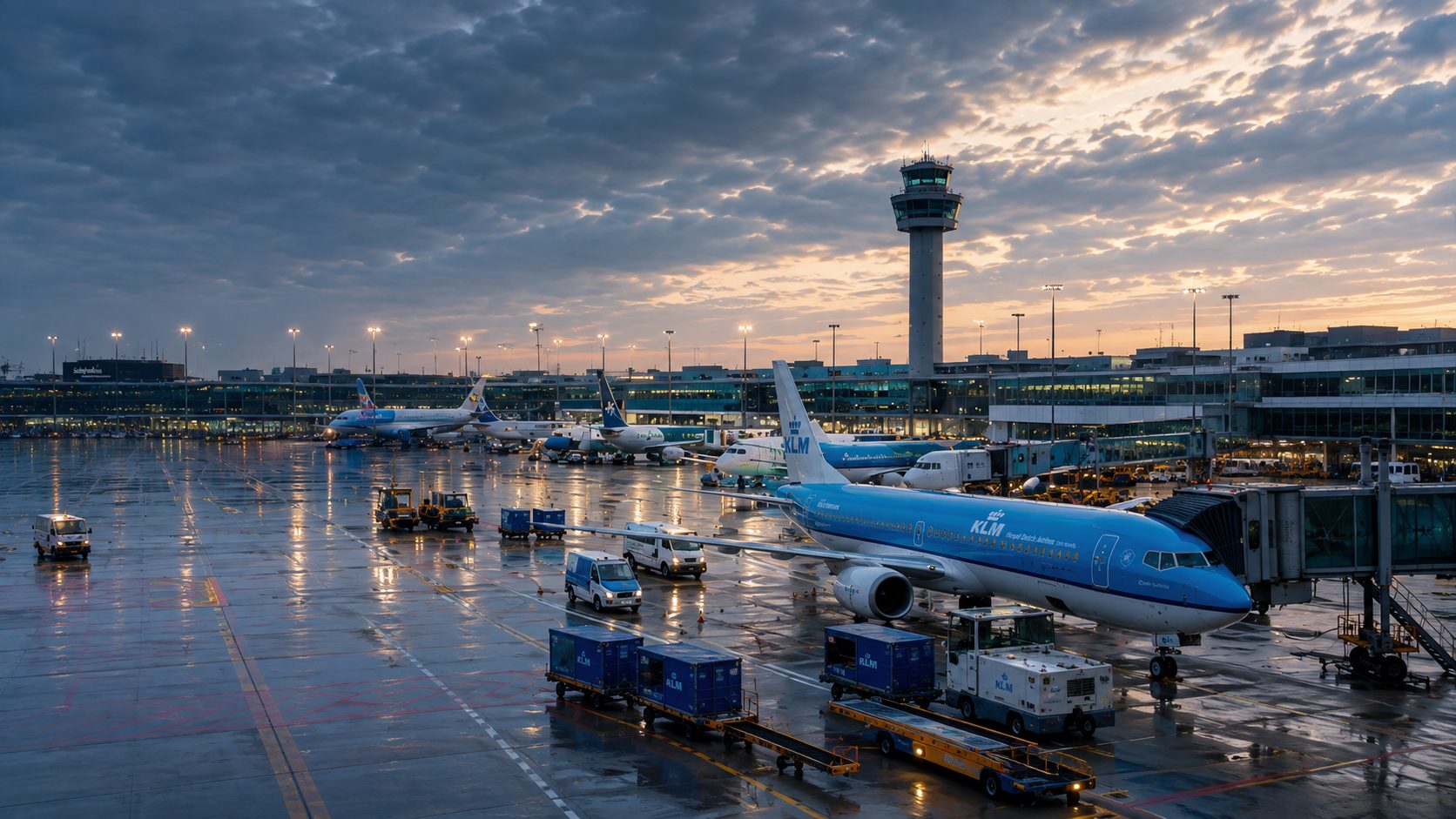
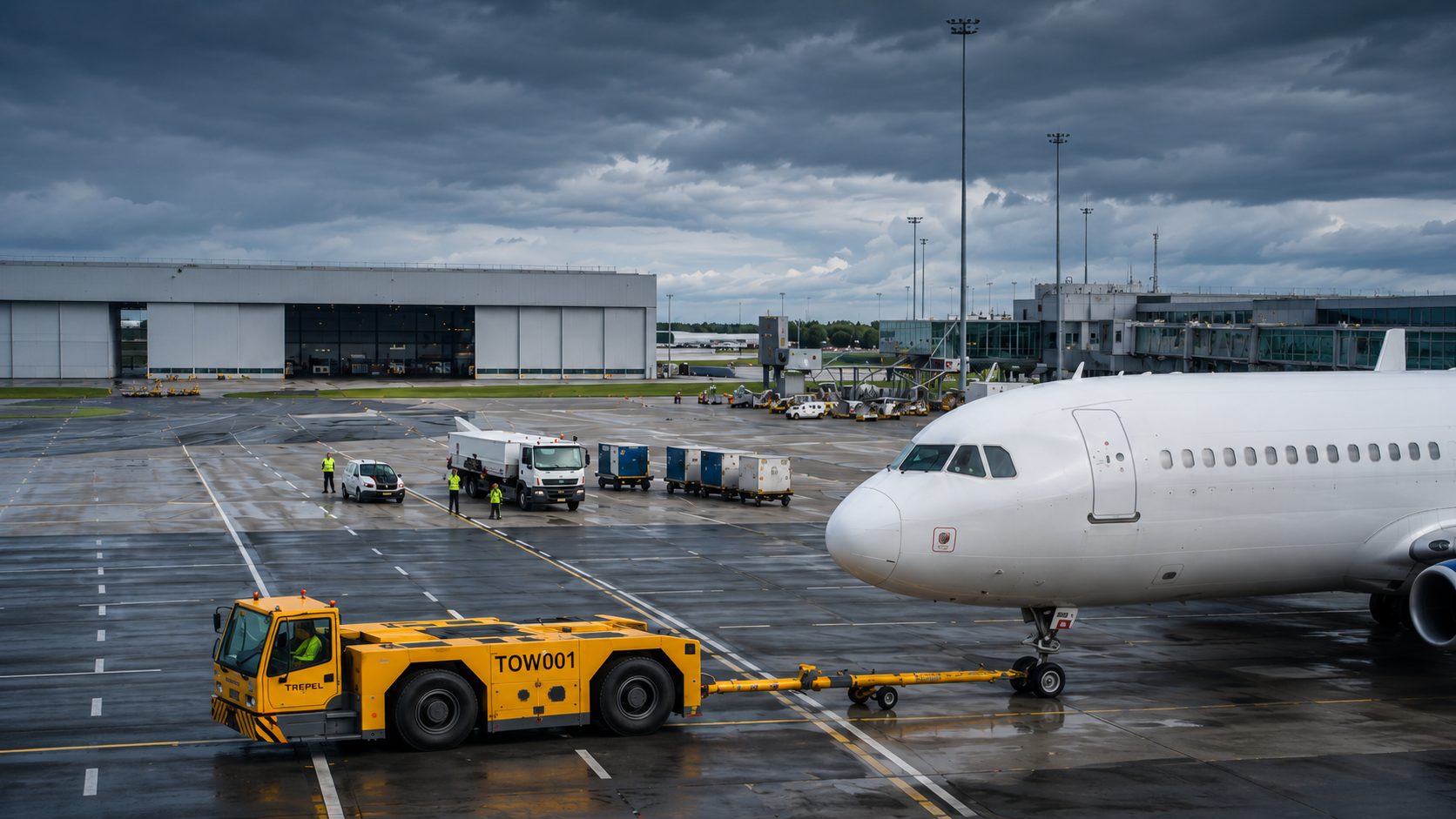
Where we come fromAirside and landside resource management for airports and airlines: stands and gates, towing, apron buses, check-in counters and baggage reclaim. Our founders worked this domain for years, so the models here are the most mature.
Defence
AdjacentBudgets are climbing, but force structures are not expanding at the pace operational tempo is. The same planning, observing and optimizing loop applies directly.
Maritime
AdjacentPorts and terminals face the same structural squeeze: a fixed physical footprint asked to absorb steadily rising throughput against hard scheduling constraints.
Discover how much additional capacity you can realize
We will walk you through the platform against your own constraints: stands, gates, counters or tows.